Green Juice Detox Guide: Benefits, Recipes & Tips
Green juice is an excellent way to increase the amount and variety of fresh vegetables in your diet. A single glass can concentrate celery, cucumber, leafy greens, herbs, citrus and other nutrient-rich produce that would otherwise be impossible to eat in one sitting.
The term green juice detox can mean anything from drinking one fresh green juice each day to undertaking a green juice cleanse. Green juice can assist the body’s normal detoxification processes by providing hydration, vitamins, minerals and plant compounds.
What Is a Green Juice Detox?
A green juice detox or cleanse usually centres on freshly prepared juices made predominantly from green vegetables. Some people simply add green juice to their normal diet, while others temporarily replace one or more meals with juice.
Typical ingredients include celery, cucumber, spinach, kale, parsley, mint, lemon and ginger, often with a smaller amount of green apple, pear or pineapple to augment the flavour.
Green juice can be added to your normal daily diet or used as part of a juice fast or cleanse.
9 Benefits of Green Juice
1. More Vegetables in a Glass
Juicing makes it practical to concentrate and consume multiple vegetables and herbs in one serving.
Celery, cucumber, spinach, kale, parsley, lemon and ginger can all go into a single juice, providing considerably greater plant variety than many people would normally eat at one sitting.
2. Concentrated Nutrient Intake
Green vegetables contain a wide range of vitamins, minerals and naturally occurring plant compounds. The precise nutritional profile depends on the ingredients, which is a reason to vary your recipes rather than drinking exactly the same juice every day.
3. Hydration
Celery and cucumber are naturally high in water, as are many other vegetables used in green juice. A vegetable-rich juice therefore contributes substantially to fluid intake while also supplying nutrients.
4. Support for Normal Detoxification
Green juice provides fluids and nutrients that support the liver, kidneys and other organs involved in the body’s normal detoxification processes.
5. Antioxidants and Plant Compounds
Leafy greens, herbs, citrus, ginger and other common green-juice ingredients contain a wide range of naturally occurring compounds including carotenoids, flavonoids and vitamin C.
6. Lower-Sugar Drink Options
Celery, cucumber, leafy greens, herbs, lemon and ginger can produce a refreshing juice with relatively little naturally occurring sugar.
7. Weight Management
A vegetable-dominant green juice can be relatively low in calories while providing considerable flavour and nutrition. It can be particularly useful in weight management when it replaces soft drinks, sweetened juices or other calorie-dense drinks.
8. Energy and General Wellbeing
Many regular juicers report feeling lighter and more energetic after introducing fresh vegetable juice.
9. A Habit You Can Actually Maintain
While some people undertake longer cleanses, just one fresh vegetable juice consumed regularly can significantly increase vegetable, nutrient and fluid intake, with the benefits that a consistent healthy habit can bring.
12 Green Juice Detox Recipes
There is no single perfect green detox juice. Different combinations make sense for different purposes: lower sugar, more leafy greens, hydration, stronger flavours or simply getting the widest possible variety of vegetables into the glass.
Use these recipes as starting points rather than commandments. Adjust quantities and ingredients to suit the produce available, your own taste and the way your body responds.
1. Classic Green Juice
- 1 cucumber
- 3 celery stalks
- 1 handful spinach
- 1 green apple
- 1/2 lemon, peeled
- Small piece of fresh ginger
This is the useful all-rounder: plenty of vegetable content, leafy greens, citrus and ginger, with enough apple to soften the flavour without making fruit the dominant ingredient. It is an everyday green juice all-rounder.
2. Low-Sugar Green Juice
- 1 cucumber
- 4 celery stalks
- 1 handful spinach
- 1 handful parsley
- 1/2 lemon, peeled
- Fresh ginger to taste
With no apple, pear or pineapple, this version keeps naturally occurring sugars substantially lower than juices including fruit. It offers a lower glycaemic load and retains a broad mixture of green vegetables and herbs.
3. Celery & Cucumber Green Juice
- 1 large cucumber
- 5 celery stalks
- 1/2 lemon, peeled
- Small handful mint
Built around two naturally water-rich vegetables, this is a light and refreshing juice, also with very little fruit sugar. It is refreshing in hot weather or whenever hydration rather than sweetness is a priority.
4. Deep Green Leafy Juice
- 1 handful kale
- 1 handful spinach
- 2 leaves Swiss chard
- 1 cucumber
- 3 celery stalks
- 1/2 lemon, peeled
Choose this when the objective is to maximise greens in the glass. Kale, spinach and Swiss chard provide different nutrient profiles, including folate and carotenoids, while cucumber and celery provide the liquid base needed to juice and drink them effectively. For an even more concentrated green juice, see our Wheatgrass Juice Guide.
5. Green Juice Without Fruit
- 1 cucumber
- 4 celery stalks
- 1 handful spinach
- 1/2 fennel bulb
- 1/2 lemon, peeled
- Small piece of ginger
Another alternative to adding fruit to green juice. Fennel adds natural sweetness and aromatic flavour while keeping naturally occurring sugars low.
6. Lemon, Ginger & Turmeric Green Juice
- 1 cucumber
- 3 celery stalks
- 1 handful spinach
- 1 lemon, peeled
- Small piece of fresh ginger
- Small piece of fresh turmeric
Ginger and turmeric contribute distinctive plant compounds, including gingerols and curcuminoids, as well as giving this juice a more intense flavour. Lemon provides vitamin C and cuts through the earthy turmeric to keep the finished juice bright and fresh.
7. Parsley & Celery Green Juice
- 5 celery stalks
- 1 cucumber
- 1 generous handful parsley
- 1/2 green apple
- 1/2 lemon, peeled
Parsley is often treated as a garnish but it can be a substantial juice ingredient, contributing vitamin C, vitamin K and carotenoids. This recipe is herb-rich rather than leaf-heavy, with just half an apple to round out the flavour.
8. Green Citrus Juice
- 1 cucumber
- 3 celery stalks
- 1 handful spinach
- 1/2 lemon, peeled
- 1/2 lime, peeled
- Small handful mint
- 1/2 green apple
Lemon, lime and mint make this noticeably fresher and sharper than the heavier leafy-green recipes. Citrus contributes vitamin C and tempers stronger vegetable flavours.
9. Cruciferous Green Juice
- 2 kale leaves
- Small piece of broccoli stem
- 1 cucumber
- 3 celery stalks
- 1/2 green apple
- 1/2 lemon, peeled
Kale and broccoli belong to the cruciferous vegetable family and contain characteristic sulphur-containing plant compounds, including glucosinolates. Their stronger flavour is balanced here with cucumber, lemon and a modest amount of apple.
10. Tropical Green Juice
- 1 handful spinach
- 1/2 cucumber
- 2 celery stalks
- 1/2 cup pineapple
- Small handful parsley
- 1/2 lime, peeled
This is deliberately sweeter than most of the juices here. Pineapple contributes vitamin C and counters the taste of strong greens. It is a useful option if you are not concerned to minimise every gram of naturally occurring sugar.
11. Spicy Green Juice
- 1 cucumber
- 3 celery stalks
- 1 handful spinach
- 1/2 green apple
- 1/2 lemon, peeled
- Fresh ginger
- Small piece of jalapeño
For people who enjoy spice, jalapeño changes the character completely and contributes capsaicin, the plant compound responsible for the heat in chilli peppers. Start cautiously: a surprisingly small amount can transform the whole glass.
12. Ultimate Green Vegetable Juice
- 3 celery stalks
- 1/2 cucumber
- 1 handful spinach
- 2 kale leaves
- Small handful parsley
- Small piece fennel
- 1/2 lemon, peeled
- Fresh ginger
- 1/2 green apple, optional
This is the broad-spectrum version: several different families of vegetables and herbs rather than a large quantity of any one ingredient. Leave out the apple for a sharper, lower-sugar juice or include it when a little sweetness makes the difference to your palate.
Want a wider range than green juice? Our 7 Best Juicer Recipes includes fruit, vegetable and mixed juice recipes beyond the green detox theme.
How to Get More From Your Green Juice
Choose Fresh Produce
Fresh vegetables and fruit generally produce better-tasting juice. Wilted greens and tired vegetables rarely improve when pushed through a juicer.
Choose Organic Where Possible
Juicing concentrates a relatively large amount of produce into each glass. Choosing organically grown fruit and vegetables reduces exposure to synthetic pesticide residues, making organic produce a sensible choice when green juice is consumed regularly.
Keep Vegetable Juice Predominantly Vegetable
Fruit is useful for balancing strongly flavoured greens, especially when developing recipes you genuinely enjoy. But adding too many apples or large quantities of pineapple can turn a vegetable juice into a high-sugar fruit drink remarkably quickly.
Celery, cucumber and milder greens make a good base. Use fruit sparingly rather than automatically.
Drink It Fresh
Fresh juice is best consumed soon after it is made. If you need to store it, refrigerate it promptly in a clean, tightly sealed container with as little air space as possible.
Don’t Forget Whole Vegetables
Juicing removes much of the insoluble fibre present in the original produce. That is one reason a large quantity of vegetables can be consumed as juice, but it is also why whole vegetables should remain part of the diet.
Don’t Turn Detox Into Punishment
If you enjoy replacing a meal occasionally with vegetable juice, that is one approach. If you feel better drinking a green juice alongside normal whole foods, that is another.
There is little virtue in making a healthy habit so extreme that you resist doing it.
Green Juice Detox Questions
What is a good green juice for a cleanse?
A vegetable-dominant combination of celery, cucumber, leafy greens, lemon and ginger is a useful starting point. Add a small amount of apple or pear if needed for flavour rather than making fruit the main ingredient.
Can I drink green juice every day?
Many people make one fresh green juice part of their normal daily diet rather than undertaking repeated juice-only cleanses. Variety may also be helpful: rotating leafy greens, herbs and other vegetables avoids relying on the same ingredients every day.
Can green juice help with weight loss?
Green juice can be useful when a relatively low-calorie vegetable drink replaces sweetened drinks or more calorie-dense foods. No single juice overrides the effects of the overall diet, and it is worth noting that fruit-heavy juices contain more sugar and energy than vegetable-dominant recipes.
Does green juice contain fibre?
Some soluble material remains in juice, but most insoluble fibre is left behind in the pulp. Juicing and eating whole vegetables therefore serve different purposes rather than one making the other unnecessary.
Should I use organic vegetables for green juice?
Where practical, yes. Juicing can use a substantial quantity of produce in one serving, and choosing organically grown fruit and vegetables reduces exposure to synthetic pesticide residues.
Is green juice the same as a green smoothie?
No. A juicer separates the liquid from most of the pulp. A blender processes the whole ingredient, so substantially more fibre remains in a smoothie. Neither is inherently the “correct” method; they simply produce different foods.
Choosing a Juicer for Green Juice
Green juice places different demands on a juicer than processing apples and carrots. Celery has long fibres, while spinach, kale, parsley and other leafy greens provide relatively little liquid and can challenge machines that handle harder produce perfectly well.
If green juice is going to become a regular habit, extraction is part of the equation. Preparation time, clogging, cleaning and how willingly you use the machine again tomorrow matter as much.
Cold press or slow juicers use a crushing and pressing action rather than the high-speed cutting action of centrifugal machines, making them particularly suitable for the leafy greens, celery and mixed vegetables commonly used in green juice.
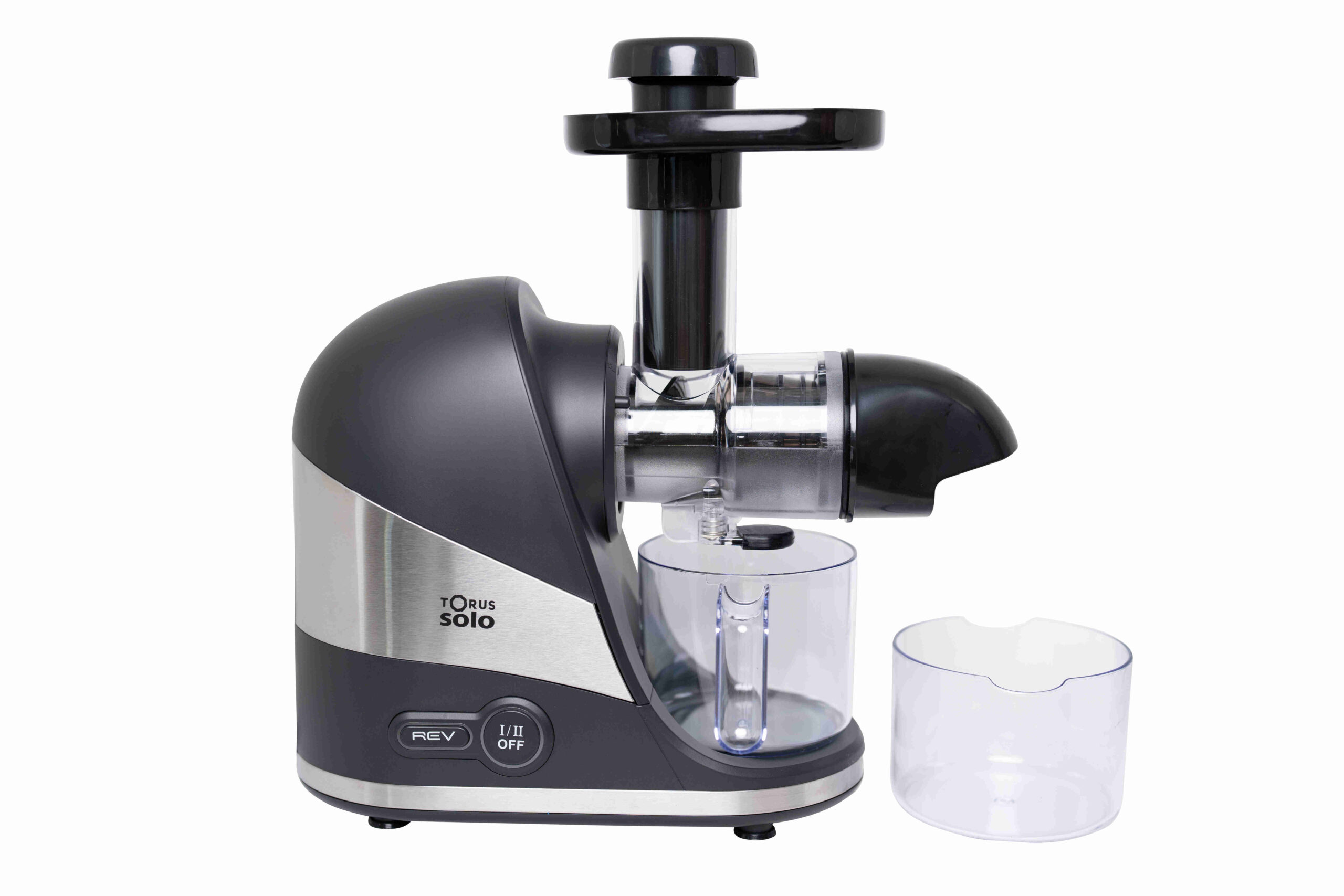
Why We Recommend the Torus Solo Gen 2 for Green Juice
The Torus Solo Generation 2 is particularly well suited to the ingredients that dominate these recipes: celery, leafy greens, herbs and mixed vegetables.
It Handles Celery and Leafy Greens Well
Long celery fibres and lightweight leafy vegetables expose weaknesses in some juicer designs. The horizontal Solo handles these ingredients particularly well, which is one reason we recommend it to people whose juicing is predominantly green.
Direct-Flow Juicing
The Solo’s horizontal direct-flow arrangement continuously moves juice and pulp through the juicing section rather than allowing fibrous material to accumulate in a large chamber.
Cleaning Is Quick
This matters more than it sounds. A machine that takes ten minutes to clean can gradually turn daily juicing into weekly juicing. Torus Solo has relatively few juicing components and its direct-flow sieve rinses clean quickly after use.
Quiet Enough for Daily Life
The slow-speed motor operates quietly, particularly useful when green juice is part of an early-morning routine.
Designed for Regular Use
The Solo Generation 2 uses a durable 100% copper motor and is intended for frequent home juicing. For someone making fresh green juice every day, longevity and ease of use can become more important than a long list of occasional-use features.
That completes the missing Wheatgrass connection while preserving the existing link back to the main Recipes page.
Internal-link triangle now complete.